Next-Generation Perovskite Solar Cells: Will They Transform Residential Rooftop Solar?
Discover how next-generation perovskite and tandem solar cells could boost residential rooftop efficiency beyond 30%, lowering solar installation costs by 2030.
By M. Khalif | Published 2026-11-04 | Updated 2026-11-10
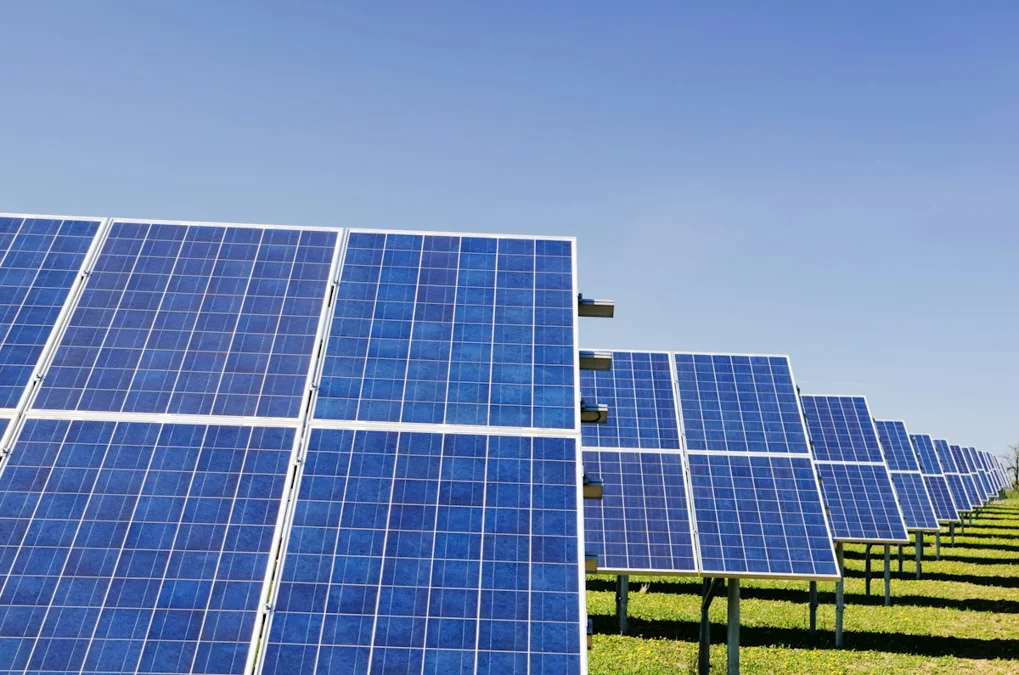
For over four decades, commercial photovoltaics have been dominated by conventional crystalline silicon modules, which face an intrinsic theoretical efficiency limit of roughly 29.4%. Today, next-generation perovskite solar cells—particularly when engineered in tandem architectures alongside silicon—are shattering laboratory records and offering the realistic prospect of rooftop modules generating upwards of 30% to 33% efficiency.
Understanding Perovskite Materials and Photovoltaic Conversion
Perovskite solar cells take their name from Russian mineralogist L. A. Perovski, designating any compound that shares a specific crystallographic structure characterized by the formula ABX3. In photovoltaic applications, hybrid organic-inorganic metal halide perovskites serve as exceptionally tunable semiconductor absorbers. Unlike silicon ingots, which require high-temperature Czochralski purification and wafer-slicing processes that consume immense energy, perovskite precursor inks can be dissolved in liquid solvents and processed at temperatures below 150°C. This allows high-throughput roll-to-roll printing onto flexible substrates or deposition directly atop conventional silicon wafers.
The Tandem Architecture: Overcoming the Shockley-Queisser Limit
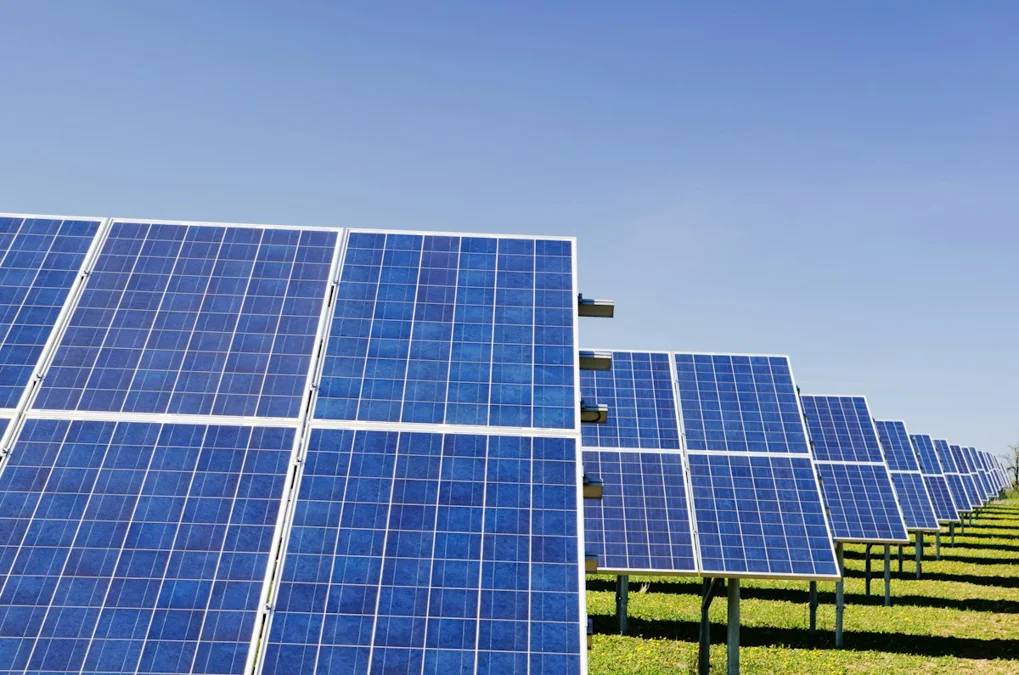
The fundamental physics of a single-junction photovoltaic cell are constrained by the Shockley-Queisser limit, which dictates that photons with energies below the bandgap pass through unabsorbed, while higher-energy photons lose excess kinetic energy as heat (thermalization). Perovskite-silicon tandem cells overcome this barrier by stacking a wide-bandgap perovskite top layer (absorbing high-energy blue and green photons) on top of a narrow-bandgap silicon bottom cell (capturing lower-energy red and near-infrared photons). Certified tandem laboratory prototypes engineered by institutes such as Fraunhofer ISE, Oxford PV, and KAUST have officially demonstrated power conversion efficiencies exceeding 33.9%, establishing a performance threshold unachievable by silicon alone.
Engineering Hurdles: Moisture Sensitivity, Thermal Stress, and Lead Encapsulation
Despite record-breaking laboratory benchmarks, the primary bottleneck separating perovskite photovoltaics from mass commercial deployment remains long-term operational durability. Organometallic halide perovskite lattices exhibit vulnerabilities to atmospheric moisture, ultraviolet radiation, and thermal cycling between day and night temperatures. Contact with ambient humidity can initiate chemical degradation back into lead iodide and organic halide salts. Leading commercial consortia are solving these vulnerabilities through advanced atomic-layer barrier coatings, fluoropolymer encapsulation barriers, and replacing volatile methylammonium cations with more stable cesium-formamidinium compositions. Strict compliance protocols ensure complete lead retention even under severe mechanical impact and hail testing.
Residential Rooftop Economics and the 2030 Market Outlook
For residential homeowners, tandem modules could fundamentally alter rooftop energy economics. Because fixed soft costs—including racking, inverters, permitting, electrical labor, and structural inspection—account for over 55% of total residential solar installation expenses, generating 30% more kilowatt-hours from the exact same roof area dramatically shortens system payback intervals. Analysts project that initial commercial tandem modules will enter premium residential and commercial markets between 2026 and 2028, with widespread cost parity with monocrystalline PERC and TOPCon panels expected across global distribution channels by 2030.
Frequently Asked Questions
What are perovskite solar cells?
Perovskite solar cells are advanced photovoltaic devices that use synthetic crystals with an ABX3 perovskite structure to absorb sunlight and convert it into electricity with high efficiency and low material costs.
Are perovskite solar panels better than silicon panels?
In terms of peak efficiency, tandem perovskite-silicon combinations outperform pure silicon. However, conventional silicon remains unmatched in 25-year operational stability, making tandem pairings the ideal hybrid technology.
How efficient can perovskite solar cells become?
Laboratory tandem cells have already reached over 33.9% efficiency, and theoretical modeling indicates multi-junction tandem configurations could eventually exceed 38% under one-sun illumination.
Are perovskite solar panels commercially available?
Pilot-scale commercial production has begun with commercial players like Oxford PV shipping initial utility-scale demonstration batches, with mass residential rooftop availability anticipated from 2026 to 2028.
Can perovskite solar panels be used on residential rooftops?
Yes, their primary commercial appeal is residential and commercial rooftops, where space constraints make generating maximum electricity per square meter highly economically advantageous.